
Wireless Communication Devices

The most difficult listening conditions reported are noisy environments. Places like restaurants, places of worship, family gatherings and meetings can be very difficult listening situations, especially for those with a hearing loss. Wireless communication devices are effective for listening in noise for individuals without hearing aids as well as for those who wish to use them in conjunction with hearing aids to further optimise their listening experience.
Wireless communication devices work by raising the volume of speech above the background noise. They also help with listening over distances. There are many applications for these devices and many different types available. The unique needs and environment of each listener are considered when selecting the most appropriate wireless communication device.
Television devices: headphones and streamers
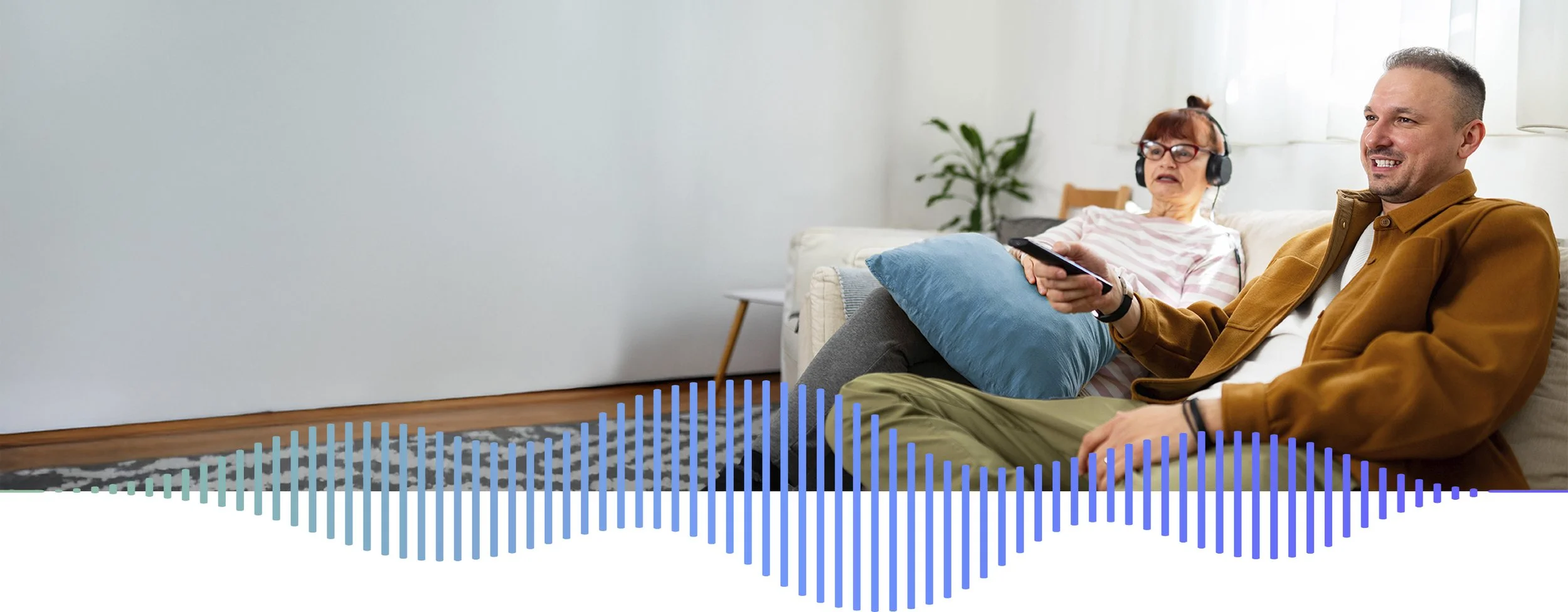
The television presents three major difficulties for the hard of hearing: the clarity of the program, the speed of the dialogue and sound effects and/or background music which may be a part of the program itself. As the sound quality of the television program is compromised listeners often increase the volume (and in some cases add subtitles) to make it easier to follow the dialogue. However, increasing the overall volume does not make things clearer and often leads to frustration for the person with hearing loss and other family members who prefer a reduced volume level. Wireless television devices can often improve listening experience for all
TV headphones can work in conjunction with hearing aids or as standalone devices. The user wears headphones and can adjust the volume and balance to suit while leaving the television settings at a level that can be enjoyed by other household members.
Television streamers are used in conjunction with hearing aids. They connect to the television and work by taking the television signal and sending it directly to the user’s compatible hearing aids.
Alerting devices
Hearing aids are designed to improve the ability to hear and understand speech, however there are additional devices available that help improve awareness of sounds around the home and workplace. These are known as alerting devices. Thanks to modern technology these systems have helped those with hearing loss live more independently and feel safer in their homes.
There are a vast range of alerting devices which signal when the following are activated:
Alarm clocks
Baby monitors
Smoke alarms
Door bells
Phone calls