

About Hearing Aids
Hearing aids are used by those with a hearing loss to aid their communication and reduce the burden of communication breakdowns.

Hearing aids come in varying styles, shapes, and technologies. There are two main styles of hearing aids: those with the device inside the ear canal area and those with part of the hearing aid sitting on top of the pinna.
Behind the ear and receiver in the canal devices have the housing sitting on top of the outer ear (pinna) coupled to an earpiece in the ear.
Custom devices are manufactured to the exact shape and size of each person’s ear canal and have all of the electronics in the ear. They are available in several sizes to suit the hearing levels, ear dimensions and management ability of the individual.
Our audiologists will discuss the advantages and disadvantages of each hearing aid style with you before you decide together which device(s) are most suitable. Things to consider during this decision-making process include:
The degree of hearing loss
The unique hearing and communication needs of the individual
Fine motor skills and the ability to use/manage hearing devices
Ear canal shape, size and length
The need for one vs two hearing aids.
Rechargeability
Bluetooth compatibility requirements
Rechargeable hearing aids
Hearing aid users report that hearing aid batteries can need replacing at the most inconvenient of times and the key benefit to rechargeable hearing aids is that they remove the need for fiddly battery changes and the inconvenience of purchasing, carrying, changing and even losing disposable batteries. Lithium-ion rechargeable battery technology is the most common form of rechargeable hearing aid. Whilst charging times differ between manufacturers, rechargeable hearing aids generally provide 18-24 hours of full time use from one full charge.
Our tailored Hearing Aid Services across Melbourne
-

Hearing Aid Prescription & Fitting
Following a recommendation for hearing aids, we work with you to choose a hearing aid style, technology level and accessories that will suit your hearing needs, lifestyle, and budget.
-
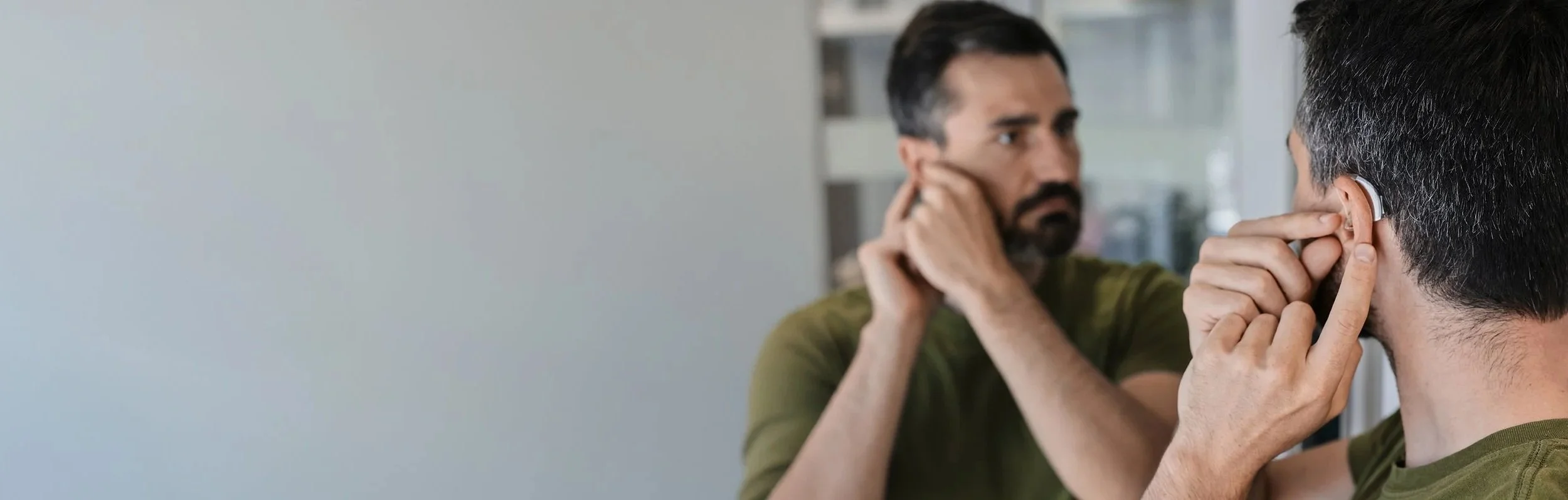
Hearing Aids Repairs & Optimisation
Sometimes patients struggle with their hearing aids, not because of the device itself, but because it hasn’t been set up or verified properly for their individual hearing prescription.
-
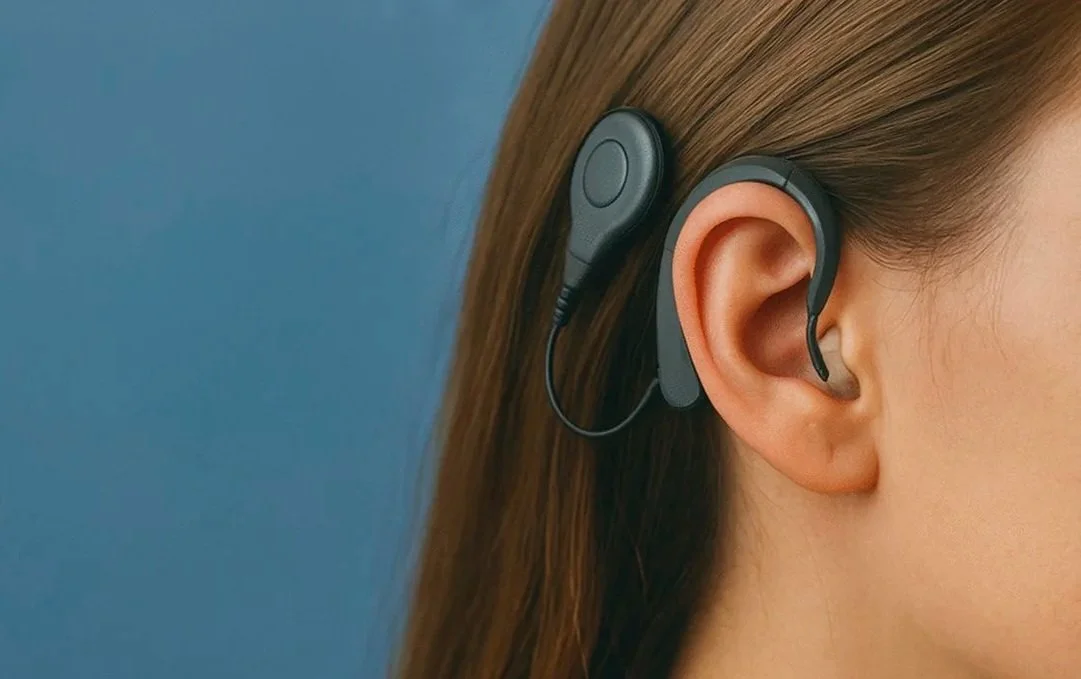
Bone Anchored Hearing Aids
A bone conduction implant is a hearing device that sends sound vibrations directly through the skull bone to the inner ear (cochlea).
Our Hearing Aid Technology Partners






What does a hearing aid do?
A hearing aid is a device worn behind the ear, in the outer ear canal, or in the middle ear to amplify sounds. It can be used to improve mild to moderately-severe losses due to sensorineural hearing impairment and conductive hearing impairment. Some hearing aids also have a built-in T-coil (telecoil) which can be used to improve the listening experience for people with single-sided deafness, or when there is a lot of noise present.
Hearing aids make it possible for people with mild to severe hearing loss to hear sounds more clearly. There are different types of hearing aids that can be used in either one or both ears.
A digital hearing aid is an electronic device that amplifies sound. Digital hearing aids convert sound waves into electrical signals that are then amplified. This type of hearing aid is a more modern technology offering greater benefits to users.
How do I know if I need a hearing aid?
If you have trouble hearing, or if people complain that you're turning the TV volume up too high, you may need a hearing aid. A hearing test can confirm whether you have a problem.
How do I know which type of hearing aid is right for me?
Your audiologist will help you choose the type of hearing aid that's best suited for your needs and lifestyle. Factors that will be considered include the severity of your hearing loss, your listening environment, and your budget.
What are the different types of hearing aids?
The four main types of hearing aids are:
1. Behind-the-ear (BTE)
This is the most common type of hearing aid. It sits behind the ear and has a clear plastic tube that goes down into the ear canal. BTEs are available in a variety of styles and colors, and are the most durable type of hearing aid.
2. In-the-ear (ITE)
This type of hearing aid is custom made to fit snugly in the outer part of your ear. ITEs are less visible than BTEs, but they may not be as durable.
3. In-the-canal (ITC) and completely-in-the canal (CIC)
These are the smallest and most discreet type of hearing aid. ITCs and CICs sit in the ear canal and are not visible once they are in place. They can be more difficult to adjust than other types of hearing aids.
4. Invisible Hearing Aid (IHA)
An invisible hearing aid is designed to be worn for extended periods of time to minimise the hassle of managing your hearing health. The devices are inserted deep into the canal, by a qualified Audiologist and remain there for their lifecycle.
What are the different parts of a hearing aid?
The different parts of a hearing aid include:
1. The microphone
This is the part of the hearing aid that picks up sound from the environment.
2. The amplifier
This part of the hearing aid increases the volume of sound that is picked up by the microphone.
3. The receiver
This is the part of the hearing aid that sends sound to your ear.
4. The battery
This powers the hearing aid. Hearing aids use either disposable or rechargeable batteries.
5. The processor
This controls how the hearing aid sounds and adjusts to different environments.
6. The casing
This is the outer shell of the hearing Aid.
What are the different features of a hearing aid?
There are many different features that you can choose from when you buy a hearing aid. Some common features include:
1. Volume control
This lets you adjust how loud or soft the sound is coming through the hearing aid.
2. Tone control
This allows you to adjust the tone of the sound, making it sound more natural.
3. Noise reduction
This feature reduces background noise, making it easier to hear conversation.
4. Directional microphones
This feature allows you to adjust the hearing aid so that it picks up sound from the front, making it easier to hear in noisy environments.
5. Telecoil
This is a special setting that helps you hear better on the telephone and in places where there is a loop system set up (such as a movie theatre or museum).
What are the different types of hearing loss?
There are two main types of hearing loss: conductive and sensorineural.
1. Conductive hearing loss
This type of hearing loss occurs when there is a problem with the structure of the ear or the way that sound waves are conducted through the ear. Conductive hearing loss can be caused by things like wax build-up, infection, or damage to the ear.
2. Sensorineural hearing loss
This type of hearing loss occurs when there is a problem with the inner ear or the way that the brain interprets sound. Sensorineural hearing loss can be caused by things like age-related hearing loss, noise exposure, or injury.
What are the benefits of using a hearing aid?
There are many benefits to using a hearing aid. Some of the most important benefits include:
1. Improved communication
Hearing aids help you hear better in both quiet and noisy environments, making it easier to communicate with others.
2. Improved quality of life
Hearing aids can help you stay connected to your loved ones and participate in activities that you enjoy.
3. Improved safety
Hearing aids help you hear warning signals and other important sounds, making it easier to stay safe in your environment.
4. Improved mental health
Research has shown that using a hearing aid can improve your mood and overall well-being.
5. Improved self-confidence
Using a hearing aid can help you feel more confident and social, which can lead to a better quality of life.
6. Reduces the risk of developing dementia
Research has shown that using a hearing aid can reduce the risk of developing dementia by up to 50%.
7. Reduces the risk of falling
Hearing aids help you hear better in your environment, which can help you stay safe when walking or climbing stairs.
8. Reduces the risk of social isolation
Hearing loss can often lead to social isolation, but using a hearing aid can help you connect with others and stay involved in your community.
9. Affordable
Many health insurance plans cover the cost of hearing aids, making them more affordable for those who need them.
10. Customizable
Hearing aids come in many different styles and colours, so you can find one that fits your personality and lifestyle.
How do I know if I need a hearing aid?
We all know that hearing loss can cause many problems. It can be a serious issue for those who work in noisy environments, in the office or on the construction site, or an inconvenience for someone wanting to tune into their favourite TV show. If you have any of the following symptoms, it is time to schedule an appointment with your audiologist:
Any noticeable change in your hearing
You have a hearing loss that is severe enough to interfere with your life
You have tinnitus
You have sudden and unexplained hearing loss
You are not able to hear a conversation from across the room or in a quiet room
You are missing conversations on your Phone or in the car
You experience dizziness, vertigo, or ringing in the ears
If you are experiencing any of these symptoms, it is important to schedule an appointment with your audiologist. The sooner you get treatment, the easier it will be to manage your symptoms and the less they will impact your life.
Can hearing aids cause vertigo?
There is no evidence to suggest that properly fitted hearing aids can cause vertigo. However, if you are experiencing vertigo or other dizziness-related symptoms, it is important to speak with your audiologist. There may be another underlying cause for your symptoms that needs to be addressed.
Can hearing aids cause headaches?
There is no evidence to suggest that properly fitted hearing aids can cause headaches. However, if you are experiencing headaches, it is important to speak with your audiologist. There may be another underlying cause for your symptoms that needs to be addressed.
How often do hearing aids need to be replaced?
Hearing aids do not need to be replaced on a regular basis. However, over time they may start to lose their effectiveness or become damaged. If you notice that your hearing aids are not working as well as they used to or if they are damaged, it is important to see your audiologist for a replacement.
Are hearing aids waterproof?
Most hearing aids are not completely waterproof, but most models come with a water-resistant coatings that can protect them from light rain or accidental exposure to water. It is important to remove your hearing aids before swimming or showering.
This page talks about:
Vestibular systems, unbiased advice, trained, tinnitus management, tinnitus, tests, test, support, specialists, services, seek, ringing, request, range, quality, qualified, purchase hearing aids, professional, patients, melbourne vic, melbourne, life, latest technology, latest equipment, independent audiologists, independent, helpful, hearing tests, hearing test, hearing services, hearing needs, hearing loss, hearing health, hearing concerns, hearing care, hearing australia, hearing assessment, hearing aids, hearing aid manufacturer, hearing aid, hearing, hear, health, friendly environment, free online hearing test, free hearing check, free hearing, foster, ears, ear wax removal, ear wax, ear, doctors, devices, contact, communication, clinic, clients, children, businesses, better hearing, best audiologists, australia, audiology, audiologists, audiologist near me, audiologist, appointment, aids, aid brands, ages, advice, adults.